


The NHS reports that menopause symptoms may begin to improve within days or weeks after starting hormone replacement therapy (HRT). One of the first changes you may notice is that you have fewer symptoms that disrupt your day. Keeping a record of your symptoms and how they change can help you discuss your progress with your doctor at your follow-up visit.
Why Does HRT Work at a Different Pace for Each Person?
HRT replaces hormones that decrease as you approach menopause. The Menopause Society describes it as the most effective treatment for bothersome hot flashes. Even so, you may not get relief from every symptom at the same time.
Your symptoms and the type of HRT you use can affect how soon you notice a change. A friend who feels better quickly may have different symptoms or use a different treatment. Your progress is best judged by how you feel compared with before you started HRT.
Dr. Angelina Postoev, a triple board-certified surgeon who provides HRT care at IBI Plastic Surgery & Med Spa can evaluate your circumstances and determine if hormone replacement therapy would be a good fit for you.
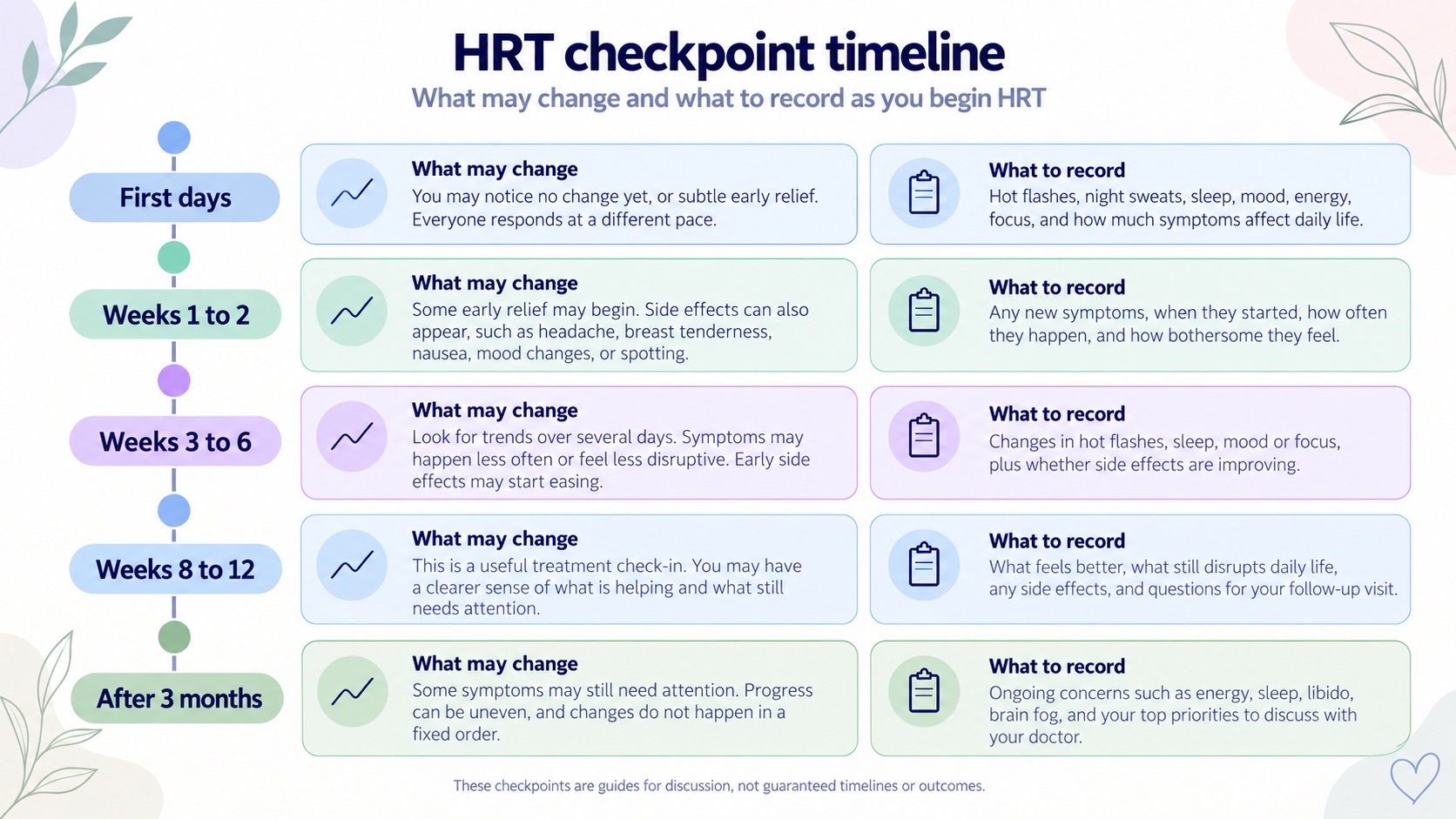
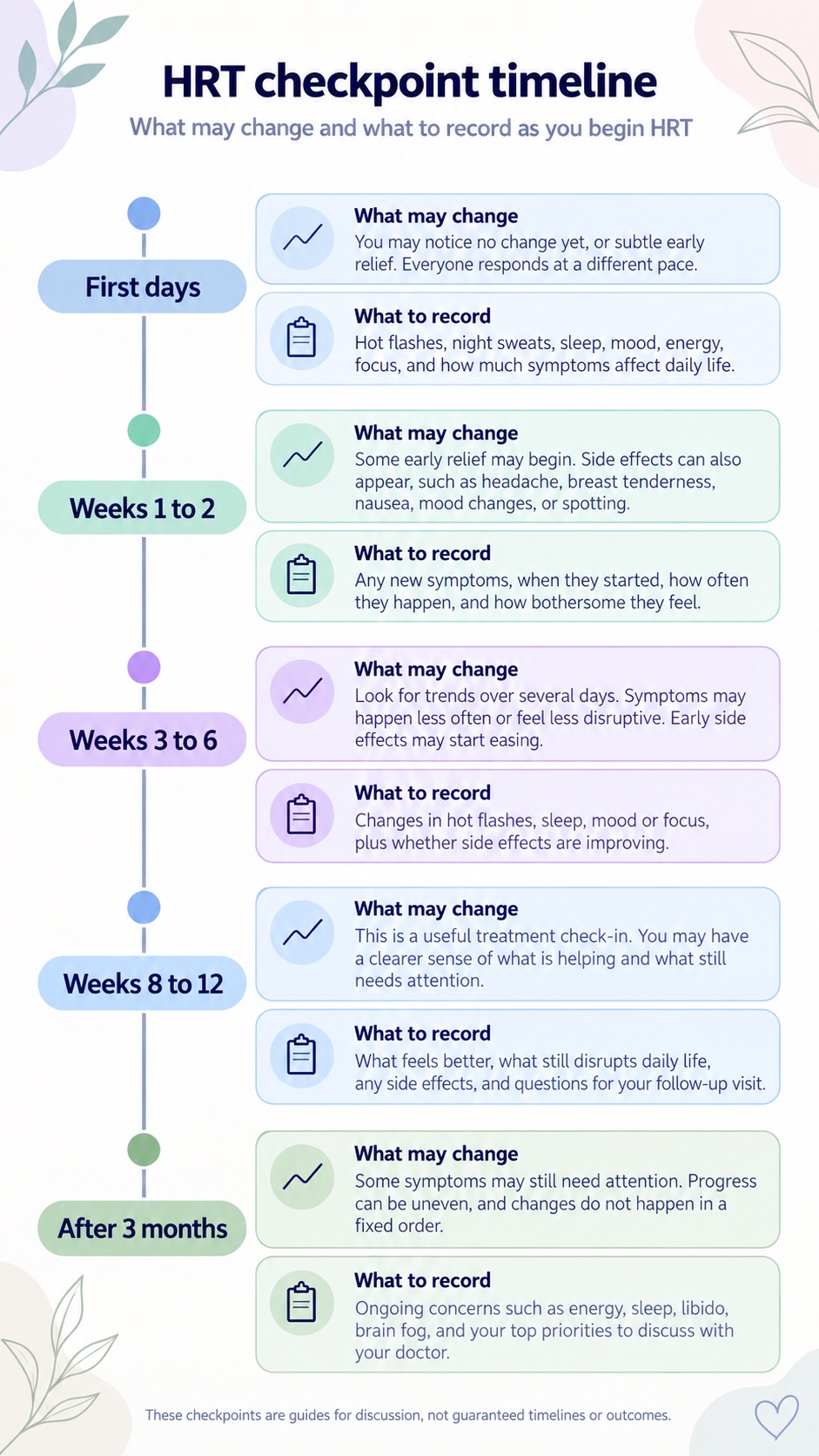
This guide explains what to watch for as you begin your treatment and what to discuss at follow-up visits. The stages below are times to check your progress, not deadlines for feeling better.
The First Days: Getting Started and Tracking Symptoms
You may feel better soon after starting HRT, or you may not notice a change right away. Everyone is different and their bodies may respond to HRT therapy differently and in a different time frame. It may take a little while to know whether treatment will give you lasting relief.
Keeping a simple daily record can help you see subtle changes that you may not otherwise notice or that you might forget to tell your doctor. Write down how you feel when you start treatment, including hot flashes, night sweats, sleep, mood, energy, and trouble concentrating. Note how often your symptoms happen, how strong they feel, and whether they interrupt work, rest, or other daily activities.
You do not need a detailed diary. A few notes in a notebook or on your phone are enough. These can help you and your doctor compare how you felt before treatment with how you feel later.
Weeks 1 to 2: Early Relief and Possible Side Effects
You may begin to notice some relief during the first two weeks, but feeling no different yet does not mean HRT has failed. Side effects can also make it harder to tell whether your menopause symptoms are improving.
Possible side effects include headaches, breast tenderness, nausea (feeling sick to your stomach), mood changes, and irregular bleeding or spotting. Many of these side effects ease after a few weeks, although the timing varies.
Keep a note of any new symptoms and when they started. You do not have to work out whether HRT or menopause is causing them. Your doctor can review what changed after treatment began and help you decide what needs attention.
Weeks 3 to 6: Checking Whether Symptoms Are Improving
Look at your symptoms over several days rather than judging treatment by one good or bad day. You might notice that hot flashes happen less often or interrupt your day less, even if another symptom has not changed.
Your notes can also show whether early side effects are easing. These details help your doctor understand both the relief you are getting and any problems you are having. The table below can help you organize that information for your next visit.
| Symptom | Before Starting HRT | Since Starting HRT | Question for Your Doctor |
|---|---|---|---|
| Hot flashes | How often they happened and how strong they felt. | Whether they happen less often or feel less intense. | Is the relief I am getting enough, or should we discuss a change? |
| Sleep | How often you woke up and how rested you felt. | Whether you wake less often or feel more rested. | Could something else be affecting my sleep? |
| Mood or focus | How symptoms affected work and daily tasks. | Whether those tasks feel easier or are still difficult. | What should we check if these symptoms are not improving? |
| New or unwanted symptoms | Whether you had the symptom before treatment. | When it started, how long it lasts, and how much it bothers you. | Should I contact you before my next visit about this symptom? |
Weeks 6 to 12: Your First Treatment Review
Your first HRT review with Dr. Angelina is usually around six weeks after you start treatment. This may be enough time to see some improvements in your symptoms and whether early side effects are an issue.
You and your doctor can then discuss whether the current treatment is helping enough. Tell your doctor if symptoms still disrupt your life or side effects still bother you. You may need a change in the dose, product, or way you take HRT.
Dr. Angelina will talk with you about how you feel, any side effects, and how you use your medication before discussing a change. Any change to your dose, schedule, or product should be done under her guidance rather than made on your own.
You do not have to wait for this visit if you develop new symptoms or feel worse. The section below explains when to contact your doctor sooner. You can also book an HRT consultation to discuss symptoms that are not improving.
After 3 Months: Symptoms That Still Need Attention
Your follow-up visit is a chance to discuss symptoms that remain, even if HRT has helped with others. These may include low energy, a lower sex drive, or brain fog, which means trouble concentrating or thinking clearly.
These changes do not have to happen in a set order. The guidance on when HRT starts working does not give separate deadlines for a better sex drive or clearer thinking. It also does not give a timeline for changes in body composition, which means the balance of fat and muscle in your body.
Explain which symptoms bother you most and what you hoped treatment would help you do. You may have fewer night sweats, but ongoing trouble concentrating may still make doing your job more difficult. This helps your doctor see which symptoms have improved and discuss what can be done about those that still affect your daily life.
Why You May Feel Worse Again
A difficult week does not necessarily mean HRT has stopped helping. Poor sleep, stress, another medication, or another health issue may also affect how you feel.
Let your doctor know when symptoms returned and whether anything else changed around that time. Mention missed doses, changes in your health, or new medicines or supplements. Your doctor can use these details to decide whether your HRT needs a review or whether another cause should be checked.
You should also mention ongoing tiredness or feeling unwell even if blood tests show improved hormone levels. Better test results do not explain every symptom or mean that your concerns should be ignored.
How Long Does It Take for an Estradiol Patch to Start Working?
An estradiol patch releases estrogen through your skin. One study of a specific seven-day patch found that relief from hot flashes began within one to two weeks but the results can vary depending on the person and the exact patch they are using.
Estradiol is a form of estrogen, one of the hormones that decreases during menopause. Different patches have different instructions for when to replace them, so follow the schedule for the product your doctor prescribed.
Bring the package or a clear photo of its label to your follow up visit to help your doctor confirm the exact patch you are using.
When to Contact Your Doctor Sooner
Irregular bleeding or spotting can happen during the first few months of HRT and usually settles within six months. Tell your doctor about it at your first review rather than assuming it does not matter.
Contact your doctor sooner if bleeding becomes heavier, continues beyond six months, or starts after you have not had periods for a while. New or worsening symptoms and bothersome side effects also should be reported before your next planned visit. Emergency symptoms like the ones listed below can be signs of a blood clot in the lungs, a stroke, or a serious allergic reaction and should prompt a call to 911. Do not wait for a routine appointment or a reply to an online message.
- Chest pain with shortness of breath.
- Sudden trouble speaking, a drooping face on one side, or sudden weakness in an arm or leg.
- Sudden swelling of your lips, tongue, or throat, or difficulty breathing or swallowing.
How to Prepare for an HRT Follow-Up in Atlanta
Bring your symptom notes, a list of medicines and supplements, and the names of your HRT products. Include when you started treatment and any changes your doctor recommended. Your notes can help you remember important details without having to recall every symptom during the visit.
A few questions can help you get more from the discussion: Is my treatment helping enough? Could these new symptoms be side effects? Should anything change, and when should we meet again?
You can learn about HRT services, hormone therapy for women, and BHRT for women before your visit. BHRT means bioidentical hormone replacement therapy, which uses hormones with the same chemical structure as those your body makes.
The team at IBI Plastic Surgery & Med Spa can help you make an appointment with Dr. Angelina Postoev to review your symptoms and discuss the next step in your care.
FAQs
How Long Does HRT Take to Work for Menopause Symptoms?
Menopause symptoms may begin to improve within days or weeks after starting hormone replacement therapy (HRT), according to the NHS. You may notice fewer hot flashes or night sweats before you feel better overall. The timing varies, so early relief does not mean every symptom will improve at once.
How Can I Tell if HRT Is Working?
HRT may be helping if your menopause symptoms happen less often, feel less intense, or interrupt your day less. You might have fewer hot flashes at work or wake up less often because of night sweats. A few daily notes can help you and your doctor see these changes more clearly than relying on memory.
Can HRT Make Me Feel Worse at First?
HRT can cause early side effects such as headaches, breast tenderness, nausea (feeling sick to your stomach), or mood changes. These can make you feel worse even if some menopause symptoms are improving. Many side effects ease within a few weeks, but let your doctor know if they bother you or are not easing.
How Long Does an Estradiol Patch Take to Work?
A study of a specific seven-day estradiol patch found that hot flashes began to improve within one to two weeks. Estradiol is a form of estrogen, which the patch delivers through your skin. This finding is not a deadline for every patch or every symptom, so discuss your own progress with your doctor.
What Should I Do if HRT Is Not Helping After Three Months?
Talk with your doctor about your symptoms and treatment plan if HRT is not helping after three months. The first treatment review is usually around this time, according to NHS guidance. Your doctor may suggest a different dose, type of HRT, or way to take it. Do not change your dose or stop treatment on your own without discussing it with your doctor.


